self-check: One
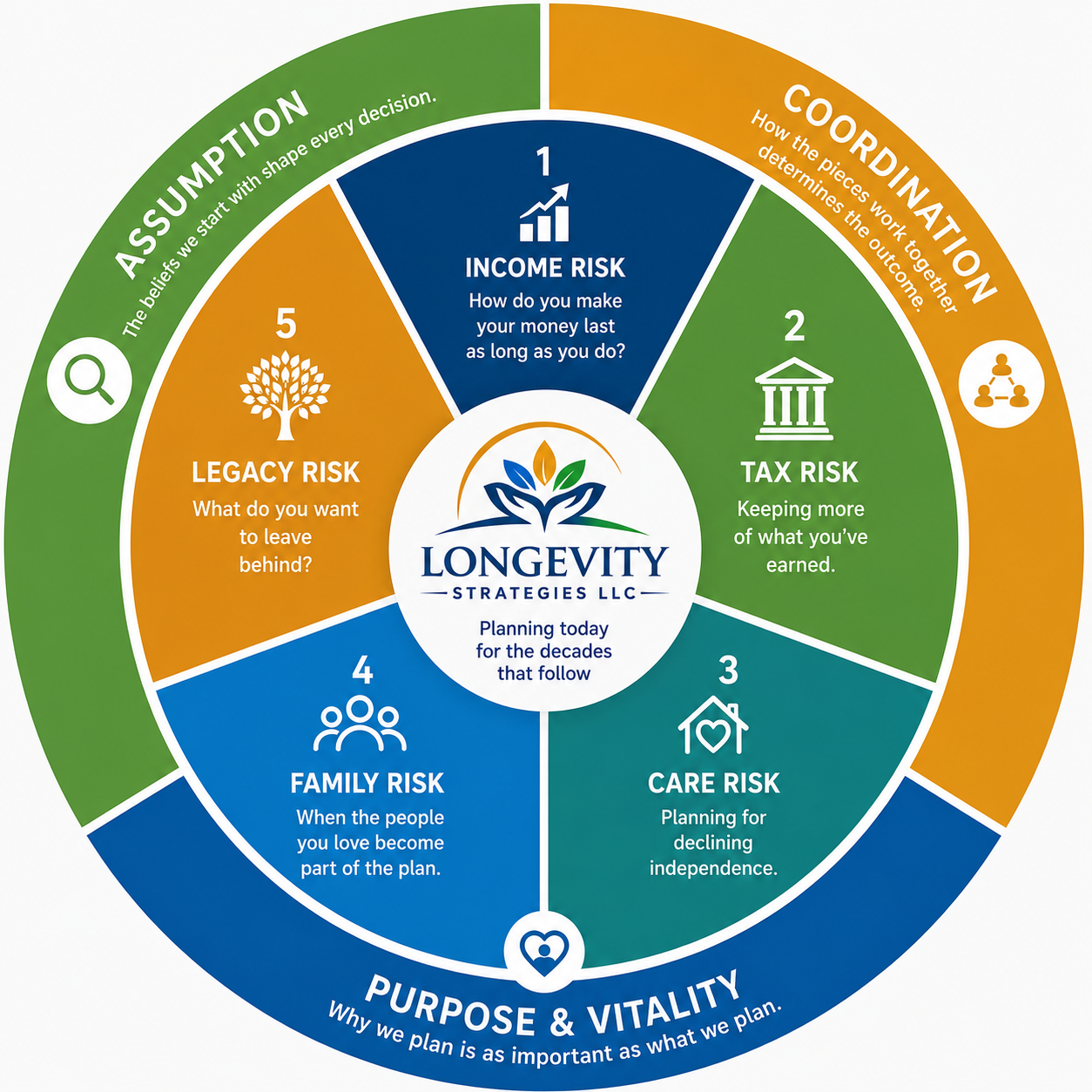
Income Risk
Will your money support the life you want?
Income planning is not only about covering basic expenses. It is about knowing which income sources are reliable, how much must come from savings, how withdrawals will be managed, and whether the plan can withstand inflation, market declines, health changes, and the loss of a spouse or partner.
self-check: Two
Tax Risk
How much of your retirement belongs to the IRS?
Taxes can affect retirement income, Social Security, RMDs, Medicare premiums, asset sales, Roth conversions, charitable giving, care funding, and what beneficiaries eventually receive. The question is not whether taxes can be avoided altogether, but whether they can be anticipated and managed.
self-check: Three
Care Risk
How will you preserve choice, independence, and dignity if your health changes?
Care planning asks where help would come from, how it would be paid for, who would have authority to act, and what burden might fall on family, friends, or a partner. A strong plan protects not only assets, but also independence and relationships.
self-check: Four
Family Risk
Will the people around you know what to do, and will the burden damage relationships?
Family risk appears when roles are unclear, documents are outdated, one person carries too much responsibility, or several people are expected to agree under stress. Planning can reduce confusion, resentment, delay, and conflict.
self-check: Five
Legacy Risk
Will what you have built, valued, and intended survive you?
Legacy is not only about who receives what. It is about whether documents, beneficiaries, titles, taxes, family expectations, charitable wishes, and personal values work together.
Guided assessment
Purpose & Vitality Overlay
Will you know what you are living for, and will your plan help you keep doing it?
A successful long life is not measured only by whether the money lasts. It also depends on health, independence, connection, contribution, interests, and a reason to look forward.
Guided assessment
Assumption Risk Overlay
How much are you relying on unstated expectations?
Many plans fail because people assume that a spouse, child, partner, friend, or advisor will know what to do. The guided Assessment helps identify where expectations need to be made explicit.
Guided assessment
Coordination Risk Overlay
Are the pieces working together?
A strong financial life requires coordination among income, taxes, care, family roles, estate documents, asset titling, beneficiary forms, and life goals.